Over the past few years, the demand for clear and dependable vision without spectacles has risen dramatically across India. It can be managing long hours on digital devices, navigating commutes or engaging in physical activities! Myopia often becomes a persistent concern.
Spectacles and contact lenses serve their purpose! But many individuals reach a point where the ongoing reliance on external eyewear feels restrictive. Eye surgery to remove glasses have evolved further. These processes offer greater precision and consistency even for those with higher refractive errors.
This article offers an informational overview of why myopia occurs, the procedures available for refractive surgery for myopia (nearsightedness), the criteria for suitability, and what individuals can expect during recovery.
What Are the Different Types of Refractive Surgery for Myopia Correction?
Laser-Based Refractive Surgeries for Myopia
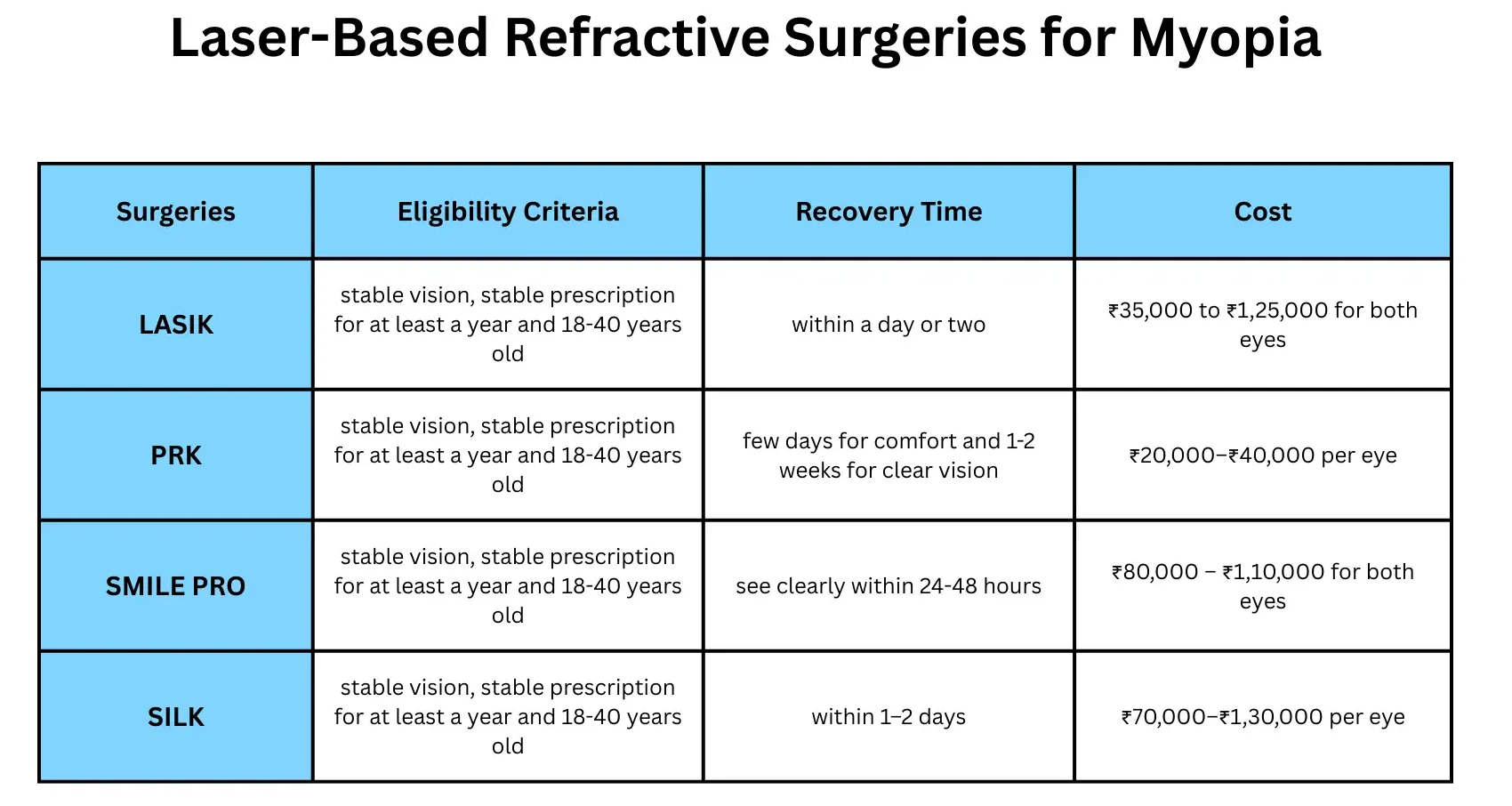
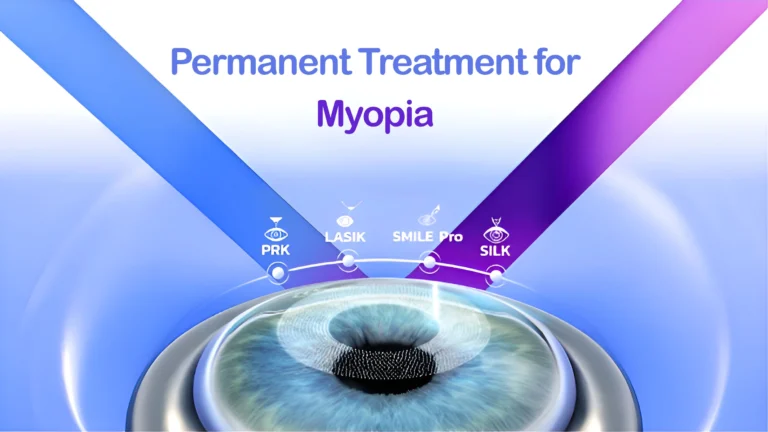
Today’s laser-based options offer varying approaches. These are to reshape the cornea, each designed to suit different clinical requirements and lifestyle expectations.
-
LASIK
LASIK surgery has maintained its popularity due to its balance of efficiency and comfort with predictability. The procedure involves creating a thin corneal flap using a femtosecond laser. It is followed by reshaping the underlying tissue with an excimer laser. Recovery tends to be quick which makes it suitable for individuals with limited downtime.
-
Key Eligibility Criteria for LASIK Surgery
The patient for LASIK surgery typically include stable vision and stable prescription for at least a year, adequate corneal thickness, and healthy ocular surfaces. Ideal candidate should generally be 18 – 35 years and free from progressive corneal disorders such as keratoconus. Proper evaluation ensures that the chosen procedure aligns with both visual expectations and anatomical safety.
Learn more about age limit of LASIK surgery.
-
Recovery Time after LASIK Surgery
LASIK surgery generally provides rapid recovery. After surgery patient can resume routine activities within a day or two.
-
Side Effects of LASIK Surgery
LASIK may cause temporary dry eyes, glare, halos, or mild discomfort. Serious side effects are rare when done by an expert LASIK surgeons.
-
Cost of LASIK Surgery
Commonly costs ₹35,000 to ₹1,25,000 for both eyes. Price depends on laser technology used, surgeon expertise, location and hospital facilities. Learn more about the cost and factors of LASIK eye surgery.
-
Success Rate of LASIK Surgery
LASIK surgery has a 95-98% success rate. Check the testimonials of Lasik surgery.
-
-
PRK
PRK is often recommended when corneal thickness or structural factors make flap-based surgeries unsuitable. Instead of creating a flap, the epithelial layer is gently removed so that the excimer laser can reshape the cornea directly. Although the initial healing phase is longer, PRK surgery offers stable long-term results and remains a trusted option for individuals prioritising corneal integrity. For many, it continues to be one of the most reliable types of eye surgery to correct vision, especially where corneal preservation is essential.
-
Key Eligibility Criteria for PRK Surgery
PRK surgery is suitable for adults (18 – 40 years) with stable vision and stable prescription for at least a year, healthy eyes, thin corneas, and no serious eye diseases or ongoing eye infections.
-
Recovery Time after PRK Surgery
PRK recovery takes a few days for comfort and 1-2 weeks for clear vision, with full visual stability improving over several weeks.
-
Side Effects of PRK Surgery
PRK may cause temporary pain, blurry vision, light sensitivity, and dry eyes. These usually improve as the eyes heal.
-
Cost of PRK Surgery
Usually ranges from ₹20,000–₹40,000 per eye. It is more affordable than LASIK but has a longer healing and recovery period.
-
Success Rate of PRK Surgery
PRK surgery has a 90-95% success rate. Check the testimonials of PRK surgery.
-
-
SMILE PRO
SMILE PRO offers a refined and minimally invasive method for myopia correction. Using a femtosecond laser, a thin lenticule is created within the cornea and removed through a micro-incision. This technique maintains more corneal stability and reduces nerve disruption.
-
Key Eligibility Criteria for SMILE PRO Surgery
Adults (18 – 40 years) with stable vision and stable prescription for at least a year, suitable myopia or astigmatism, healthy eyes, and enough corneal thickness may qualify for SMILE Pro surgery.
-
Recovery Time after SMILE PRO Surgery
SMILE Pro recovery is fast. Most people see clearly within 24-48 hours and return to normal activities in a few days.
-
Side Effects of SMILE PRO Surgery
SMILE Pro may cause mild dry eyes, glare, or halos, but side effects are usually temporary and vision stabilizes quickly.
-
Cost of SMILE PRO Surgery
An advanced, minimally invasive laser surgery costing around ₹80,000 – ₹1,10,000 for both eyes, offering faster recovery and less dryness.
-
Success Rate of SMILE PRO Surgery
SMILE PRO surgery has a 95-98% success rate. Check the testimonials of SMILE PRO surgery.
-
-
SILK
SILK represents a new generation of lenticule-based procedures. In this process precision and surface smoothness play a central role. A high-speed femtosecond laser sculpts and removes a lenticule through a small incision. This results in a clean corneal interface. The minimal disruption to surface layers supports a comfortable experience and consistent visual stability. SILK surgery is recognised as one of the leading new refractive surgery technologies gaining momentum in 2025.
-
Key Eligibility Criteria for SILK Surgery
SILK surgery suits adults (18 – 40 years) with stable vision and stable prescription for at least a year, healthy eyes, enough corneal thickness, and myopia or astigmatism within safe limits.
-
Recovery Time after SILK Surgery
SILK surgery recovery is quick. Vision improves within 1–2 days, and most people return to normal activities within a few days.
-
Side Effects of SILK Surgery
Mild discomfort, temporary blurry vision, or light sensitivity may occur, usually improving as the eyes heal fully.
-
Cost of SILK Surgery
A newer blade-free laser procedure costing about ₹70,000–₹1,30,000 per eye, known for precision, comfort, and quick visual recovery.
-
Success Rate of SILK Surgery
SILK surgery has a 96-99% success rate. Check the testimonials of SILK surgery.
-
Comparison Table of Different Types of Laser Based Refractive Surgery for Myopia
| Feature | Refractive Surgeries for Myopia | |||
|---|---|---|---|---|
| LASIK | SILK (Smooth Incision Lenticule Keratomileusis) | PRK | SMILE Pro | |
| Surgical Technique | Flap-based laser reshaping | Flapless lenticule extraction | Surface laser reshaping | Flapless lenticule extraction |
| Corneal Flap | Yes | No | No | No |
| Laser Used | Femtosecond + Excimer | Femtosecond (ELITA) | Excimer | Femtosecond (VISUMAX 800) |
| Incision Size | ~20 mm flap | ~2 mm | No incision | ~2–3 mm |
| Healing Time | Fast (1–2 days) | Very fast (24–48 hrs) | Slow (1–2 weeks) | Very fast (24–48 hrs) |
| Post-Op Discomfort | Mild | Very mild | Moderate to high | Very mild |
| Dry Eye Risk | Moderate | Low | Low–Moderate | Lowest |
| Corneal Strength Preserved | Moderate | High | High | Highest |
| Suitable Myopia Range | Low to high | Low to high | Low to moderate | Moderate to high |
| Pain During Surgery | Painless | Painless | Mild discomfort | Painless |
| Recovery time | 1–2 days | 1–2 days | 7–10 days | 1–2 days |
| Sports / Active Lifestyle | Good (after healing) | Excellent | Excellent | Excellent |
| Technology Age | Well-established | Newest generation | Oldest technique | Advanced modern |
| Re-treatment Ease | Easy | Moderate | Easy | Moderate |
What are the Expectations after Laser Based Refractive Surgeries for Myopia?
After laser eye surgery for myopia, vision usually improves within a few days. Patients are advised to use prescribed eye drops, avoid eye rubbing, limit exposure to dust and bright sunlight, and attend follow-up appointments. These steps help ensure stable visual outcomes and smooth healing. Most people achieve clear vision and reduced dependence on glasses or contacts.
What are the Latest Technologies Used for Laser Based Refractive Eye Surgeries for Myopia?
-
Femtosecond Lasers
A laser that creates a precise corneal flap instead of using a blade. The bladeless LASIK procedure is used for it rather than a traditional mechanical blade. It provides more accuracy, less risk of complications like flap issues, and faster healing.
-
Wavefront-Guided LASIK
It uses a detailed map of how light travels through your eye to correct even small imperfections. It fixes issues like glare and halos, giving better overall vision quality.
-
Topography-Guided LASIK
It customizes surgery based on detailed maps of your cornea. It is perfect for people with irregular corneas, offering more precise vision correction.
-
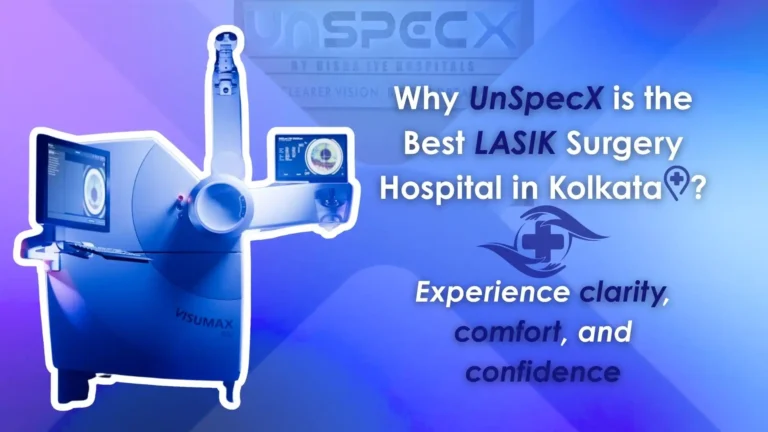
ZEISS VisuMax 800
The ZEISS VisuMax 800 is an advanced femtosecond laser used for bladeless LASIK and SMILE (Small Incision Lenticule Extraction) procedures. It is known for its extreme accuracy in creating flaps, which leads to a smoother, more predictable surgery. It operates at an impressive 800 kHz (800,000 pulses per second), making it one of the fastest femtosecond lasers available. This means quicker surgery times and potentially less discomfort.
Non-Laser and Intraocular Type (Lens-based) Refractive Surgeries for Myopia Correction
Not all refractive surgeries for myopia use lasers. Some procedures correct vision by placing or replacing a lens inside the eye. These options are mainly recommended for people who are not suitable for laser surgery or have high levels of myopia.
-
Phakic Intraocular Lens (Phakic IOL)
In this procedure, a thin artificial lens is implanted inside the eye without removing the natural lens. The added lens helps focus light correctly on the retina.
Key points:
- Suitable for moderate to high myopia
- Natural lens is preserved
- Reversible in many cases
- Provides sharp and stable vision
Phakic IOLs are commonly used when laser surgery is unsafe due to thin corneas or very high power.
-
Refractive Lens Exchange (Clear Lens Extraction)
This surgery involves removing the eye’s natural lens and replacing it with an artificial intraocular lens, similar to cataract surgery. The new lens corrects myopia permanently.
Key points:
- Used for very high myopia or early lens changes
- Eliminates future cataract risk
- Not reversible
- More common in older patients
This option is usually chosen when other refractive surgeries are not suitable
-
Conductive Keratoplasty (Non-Laser Corneal Procedure)
This is a non-laser technique that uses controlled heat to reshape the cornea. It is rarely used today for myopia but is still considered a non-laser refractive method.
Key points:
- No laser involved
- Effect may reduce over time
- Limited role in modern myopia correction
Advantages of Non-Laser and Intraocular Procedures
- Suitable for high myopia
- Good option for thin corneas
- Often provides stable, high-quality vision
Limitations and Risks of Non-Laser and Intraocular Procedures
- Invasive compared to laser procedures
- Risk of infection or inflammation
- Requires careful long-term follow-up
Quick Differentiation Table Comparing Laser-based and Non-laser Based Refractive Surgeries for Myopia
| Feature | Laser Refractive Surgeries | Non-Laser Refractive Surgeries |
|---|---|---|
| Common Types | LASIK, PRK, SMILE Pro, SILK | Phakic IOL, Refractive Lens Exchange |
| Method | Reshapes the cornea using laser | Implants or replaces a lens inside the eye |
| Invasiveness | Minimally invasive | More invasive (intraocular surgery) |
| Corneal Involvement | Yes | No corneal reshaping |
| Suitable Myopia Range | Low to moderate / some high | Moderate to very high myopia |
| Ideal for Thin Corneas | Limited | Yes |
| Reversibility | Mostly irreversible | Phakic IOL often reversible |
| Recovery Time | Fast (1–10 days) | Longer (1–2 weeks or more) |
| Risk Level | Low when properly selected | Higher (infection, inflammation risks) |
| Typical Age Group | 18–40 years | Usually 25+ (RLE more common after 40) |
| Long-Term Maintenance | Minimal | Requires long-term follow-up |
In simple terms:
- Laser based refractive surgeries are preferred for most people with suitable corneas and moderate myopia.
- Non-laser surgeries are best for very high myopia, thin corneas, or when laser surgery is not safe.
What Causes Myopia and Why Vision Correction is Needed?
Understanding what leads to myopia helps individuals make informed decisions about long-term correction and the role refractive surgery can play.
How Myopia Develops and Progresses Over Time
Myopia stems from the way the eye focuses light. When the eyeball grows longer than normal or the cornea becomes too curved, light falls in front of the retina instead of directly on it. This results in blurred distance vision.
Over the past few years, increased digital exposure and reduced time outdoors with lifestyle changes have contributed to a rising number of myopia diagnoses. High myopia brings additional concern due to its association with retinal changes and long-term structural risks.
Several factors influence the development of myopia, such as:
- Long durations of digital or near-work activity
- Family history of refractive errors
- Early onset of near-focused tasks
- Limited exposure to daylight during growth years.
Limitations of Glasses and Contact Lenses for Myopia Correction
Spectacles and lenses remain effective for vision correction, yet many adults feel they do not fully align with active routines or occupational requirements. Spectacles can restrict peripheral vision, fog easily in humid or outdoor conditions, and may not be ideal during sports or travel. Contact lenses provide greater freedom of movement but may cause dryness, irritation, or discomfort when used for extended periods. These limitations often prompt individuals to consider myopia treatment without glasses, especially when everyday comfort, appearance, or professional needs influence decision-making.
Conclusion
As laser technology and diagnostic tools continue to advance, refractive surgery for myopia has become a practical and dependable option for adults seeking visual clarity without prolonged reliance on spectacles or contact lenses. In 2025, the emphasis on precision and personalised care has made refractive procedures more predictable than ever. For many adults with stabilised refractive errors, refractive surgery for myopia offers a meaningful step towards long-term visual independence.
Written and Checked by:

Dr. Arup Bhaumik
Qualification: MBBS from Nil Ratan Sircar Medical College and MS in Ophthalmology from the University of Calcutta
Speciality: Cataract and Lasik
Experience: 15+ years in vision correction procedures with 70K+ surgeries
Frequently Asked Questions
Yes, several modern procedures can address high myopia, depending on corneal thickness and eye health.
Most individuals resume daily tasks within 1-2 days after LASIK, SMILE PRO, or SILK, while PRK requires additional recovery time.
Many individuals achieve excellent unaided vision, although outcomes depend on refractive levels and ocular health.
The corneal correction is permanent, although natural age-related changes like presbyopia may occur later.