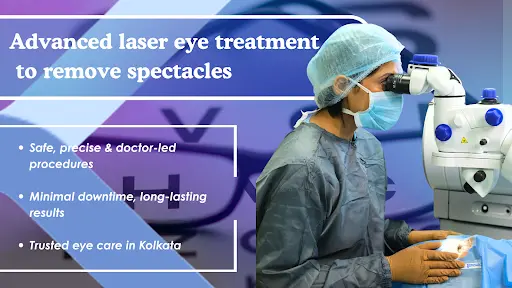
Over the past decade, the desire to live without spectacles or contact lenses has grown significantly. For many individuals, glasses become inconvenient during work, travel, sports, or prolonged screen use. With advancements in laser technology and the availability of highly trained ophthalmologists, laser treatment for eyes to remove specs has become a safe, precise, and reliable solution.
By 2026, refractive eye surgeries are more refined than ever, offering personalized correction based on individual corneal structure and visual needs. Whether spectacles have been a long-standing part of your life or you are simply seeking greater visual freedom, understanding the available options is the first step toward clear, natural vision.
This article provides a detailed overview of laser eye surgery to remove glasses, the different procedures available, eligibility criteria, recovery expectations, safety considerations, and outcomes.
What is Laser Eye Surgery to Remove Glasses?
Laser eye surgery, also known as refractive surgery, corrects vision by reshaping the cornea so that light focuses accurately on the retina. This reduces or eliminates refractive errors such as:
- Myopia (nearsightedness)
- Hyperopia (farsightedness)
- Astigmatism
These procedures are designed to provide long-term visual clarity and reduce dependence on spectacles or contact lenses.
What are the Different Types of Laser Eye Surgery to Correct Vision?
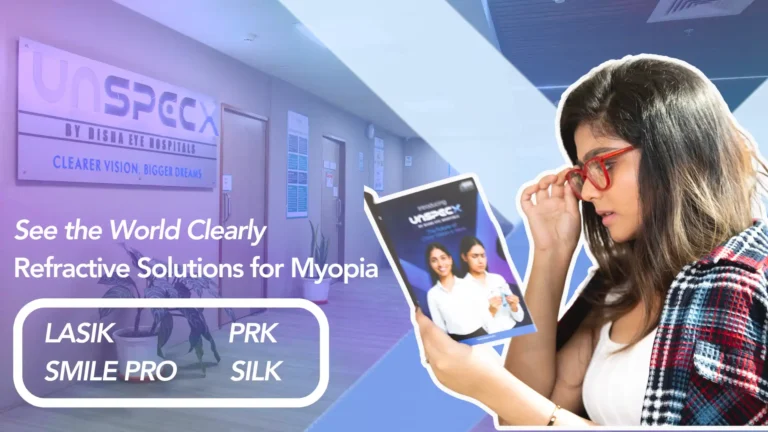
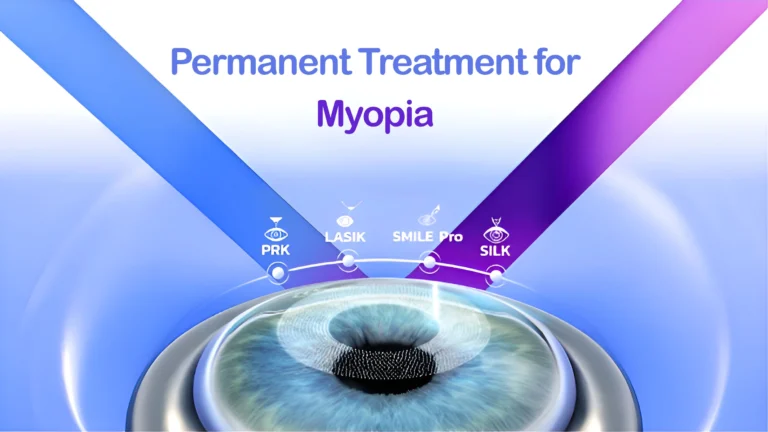
LASIK
LASIK has become a preferred option for individuals seeking long-term freedom from spectacles due to its precision and quick visual recovery. At a well-equipped LASIK surgery Hospital, the procedure is performed using advanced laser systems that gently reshape the cornea to correct refractive errors. The process is painless, completed within minutes, and allows most patients to notice clearer vision within a day. Careful pre-surgical evaluation and post-operative follow-up at a specialised LASIK surgery Hospital play a crucial role in ensuring safe outcomes and stable, long-lasting vision.
Key Eligibility Criteria for LASIK Surgery
- Age typically between 18-40 years. Learn more about the age limit of LASIK surgery
- Stable vision and prescription for at least one year
- Adequate corneal thickness
- Healthy eyes without progressive corneal disorders
A detailed eye evaluation ensures safety and long-term stability.
Recovery Time after LASIK Surgery
Most patients experience clear vision within 24-48 hours and can resume routine activities within a couple of days.
Side Effects of LASIK Surgery
Temporary dry eyes, glare, halos, or mild discomfort may occur. Serious complications are rare when performed by experienced surgeons.
Cost of LASIK Surgery
Usually ranges between ₹35,000 to ₹1,25,000 for both eyes, depending on technology, surgeon expertise, and centre facilities. Learn more about the cost factors of LASIK eye surgery.
Success Rate of LASIK Surgery
LASIK surgery has a 95-98% success rate, with most patients achieving clear vision quickly. Check the testimonials of Lasik surgery.
PRK (Photorefractive Keratectomy)
PRK is advised for patients who have thin corneas or are not suitable candidates for flap-based eye surgeries. In this technique, no corneal flap is created. Instead, the outer epithelial layer is gently removed, allowing the excimer laser to reshape the cornea directly to correct vision.
Key Eligibility Criteria for PRK Surgery
- Adults with stable prescription
- Thin corneas
- Healthy eyes without active infection or disease
Recovery Time after PRK Surgery
Initial discomfort lasts a few days, while clear vision develops over 1-2 weeks. Full visual stability may take several weeks.
Side Effects of PRK Surgery
Temporary pain, light sensitivity, blurry vision, and dryness may occur during early healing.
Cost of PRK Surgery
Typically ranges from ₹20,000-₹40,000 per eye, making it a more affordable option with excellent long-term outcomes.
Success Rate of PRK Surgery
PRK surgery has a 90-95% success rate, helping most patients achieve clear, stable vision. Check the testimonials of PRK surgery.
SMILE / SMILE PRO
SMILE Pro is a minimally invasive laser vision correction technique that does not involve creating a flap. A femtosecond laser forms a thin lenticule inside the cornea, which is extracted through a very small incision. This approach helps maintain corneal stability and minimises nerve disturbance.
Key Eligibility Criteria for SMILE Pro Surgery
- Age between 18-40 years
- Stable prescription
- Suitable myopia or astigmatism
- Adequate corneal thickness
Recovery Time after SMILE Pro Surgery
Most patients achieve functional vision within 24-48 hours and return to normal activities quickly.
Side Effects of SMILE Pro Surgery
Mild dryness or glare may occur temporarily, with faster stabilisation compared to LASIK.
Cost of SMILE Pro Surgery
Generally costs around ₹80,000-₹1,10,000 for both eyes.
Success Rate of SMILE PRO Surgery
SMILE PRO surgery has a 95-98% success rate, giving most patients clear and stable vision quickly. Check the testimonials of SMILE PRO surgery.
SILK (Smooth Incision Lenticule Keratomileusis)
SILK is an advanced lenticule-based vision correction procedure designed to achieve a smoother corneal surface with greater surgical accuracy. It employs next-generation femtosecond laser technology to minimise impact on the corneal surface and support comfortable, stable visual outcomes.
Key Eligibility Criteria for SILK Surgery
- Age between 18-40 years
- Healthy corneas
- Myopia or astigmatism within safe limits
Recovery Time after SILK Surgery
Vision improves within 1-2 days, with rapid comfort and visual stability.
Side Effects of SILK Surgery
Temporary light sensitivity or mild blur may occur but usually resolves quickly.
Cost of SILK Surgery
Costs approximately ₹70,000-₹1,30,000 per eye, depending on centre and technology.
Success Rate of SILK Surgery
SILK surgery has a 96-99% success rate, helping most patients achieve clear and stable vision fast. Check the testimonials of SILK surgery.
Comparison Table of Laser-Based Eye Surgeries to Remove Specs
The following comparison table provides a detailed overview to help you understand the strengths and limitations of each procedure.
| Procedure | Ideal Candidate | Technology Used | Healing & Visual Recovery | Advantages | Limitations / Considerations |
|---|---|---|---|---|---|
| Standard LASIK | Normal-thickness corneas, mild-moderate refractive errors | Microkeratome + Excimer Laser | Rapid recovery; usable vision in 1-2 days | Reliable, widely accessible, well-researched | Not suitable for very thin or irregular corneas |
| Blade-Free (Femto) LASIK | Those prioritising precision and improved safety | Femtosecond + Excimer Laser | Stable clarity in 1-3 days | More precise flap creation, reduced complications. | Still a flap-based method; not ideal for all corneal profiles |
| Contoura Vision LASIK | Individuals with irregular corneas or frequent night-vision issues | Topography + Femtosecond/Excimer Laser | Sharp HD clarity within 24-72 hours | Enhanced contrast, better night vision, highly precise | Requires strict eligibility; higher cost |
| SMILE / SMILE PRO / SILK | Active individuals, thicker prescriptions, thin corneas | Femtosecond Laser | Vision stabilises in 2-4 days | Flap-free, strong corneal biomechanics, less dryness | Limited suitability for hyperopia |
| PRK / ASA | Thin corneas, defence professionals, sports persons | Excimer Laser | Initial healing in 3-7 days; clarity improves over weeks | No flap; excellent long-term stability | Longer recovery and temporary discomfort |
| Trans-PRK / Smart PRK> | Patients unfit for LASIK/SMILE seeking greater comfort | Surface Ablation Laser | Faster healing than PRK; improved comfort | Non-contact and flap-free | Recovery is still longer than LASIK or SMILE |
What to Expect after Laser Treatment for Eyes to Remove Specs
After surgery, patients are advised to:
- Use prescribed eye drops regularly
- Avoid rubbing the eyes
- Protect eyes from dust and bright sunlight
- Attend scheduled follow-up visits
Most individuals achieve stable, clear vision and significantly reduced dependence on spectacles or contact lenses.
Conclusion
If you are considering a dependable and long-term way to achieve clear, natural vision, eye surgery to remove glasses remains one of the most effective solutions available today. Advanced eye procedures like LASIK, PRK, and flap-free SMILE, when performed by top ophthalmologists help patients achieve clear and stable vision using safe technology and expert care they can trust. By understanding your options, assessing the laser eye surgery cost, reviews of laser surgeries and choosing a reputable ophthalmology centre, you can take a confident step towards a life of comfort, clarity, and convenience.
Written and Verified by:

Name: Dr. Arup Bhaumik
Qualification: MS
Speciality: Cataract and Lasik
Frequently Asked Questions
Laser eye surgery offers long-lasting correction, though age-related changes like presbyopia may still develop naturally.
SMILE and PRK are often recommended as they avoid flap creation and preserve more corneal strength.
Most LASIK or SMILE patients resume work within 1-2 days, while PRK may require a longer recovery period.
Not always. It is advisable to check whether follow-up consultations, scans, and enhancements are part of the package.
Modern technology in laser eye surgery uses precise mapping and real-time tracking, reducing risks and ensuring safer, more accurate vision correction.